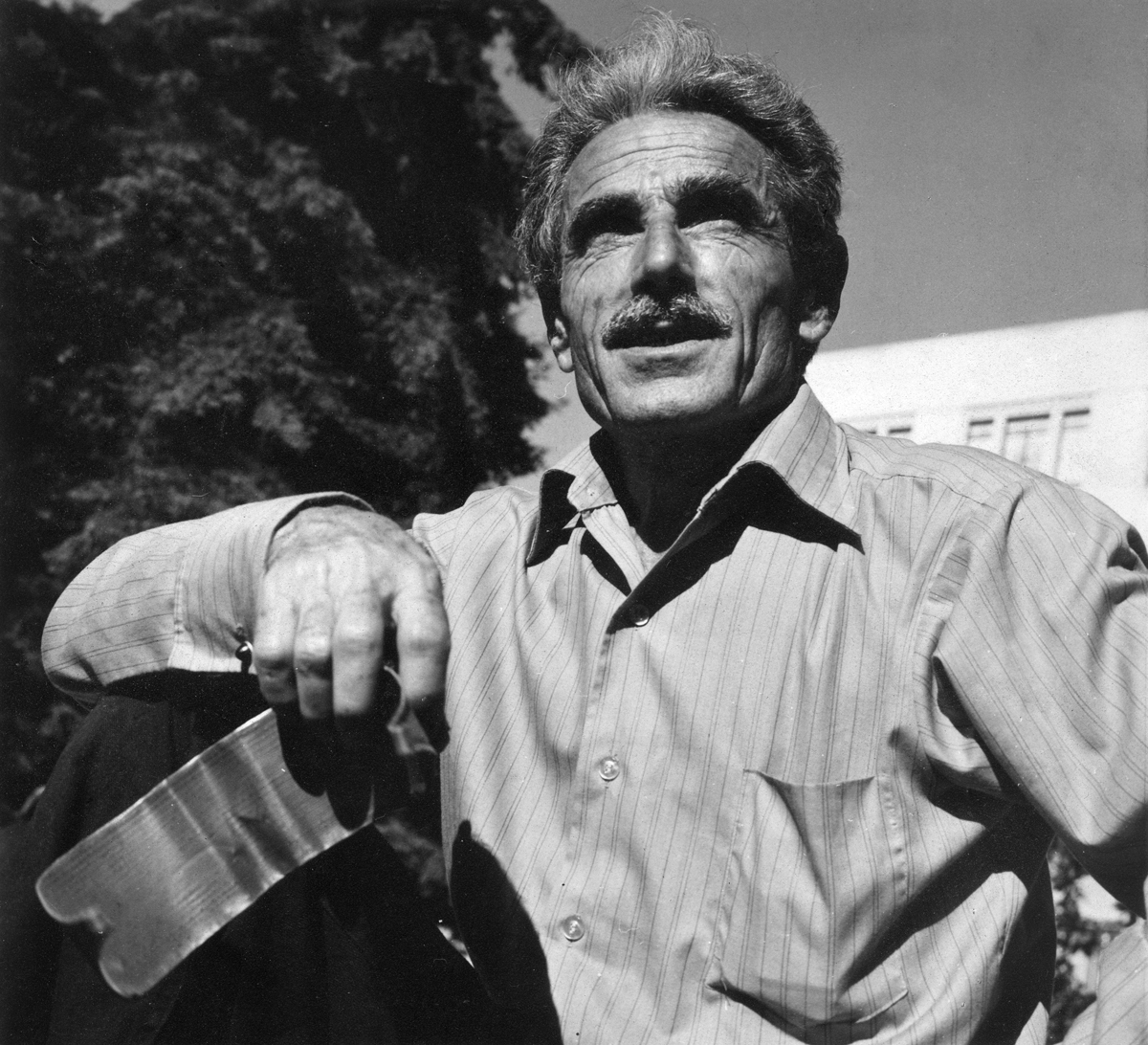
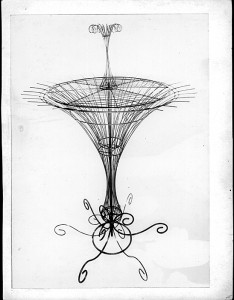
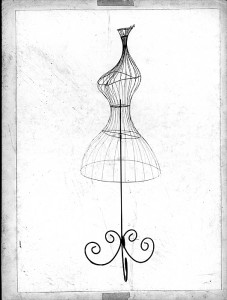
 Mr. Sher was a witty and ingenious artist who preferred to call himself a “wire worker” rather than a sculptor, but in fact he often created large works in plate steel, as well as small wire pieces such as fruit baskets and throne like chairs.
He was best known perhaps for outdoor and indoor menorahs that grace many Bay Area homes and gardens. One of his finest is on the grounds of the Judah L. Magnus Museum in Berkeley.
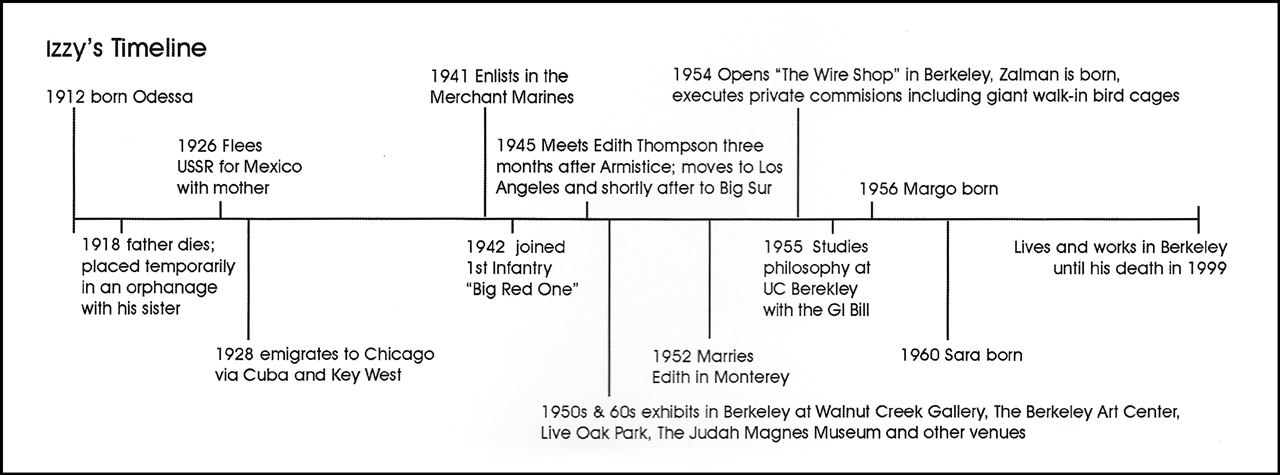
He was born in 1912 in Odessa, Russia, where there was a large Jewish community. His father died when he was 6 and he and his younger sister were placed for a time in an orphanage. After the revolution of 1917, it became difficult to leave the Soviet Union, but Mr. Sher’s mother, thanks to her courage and persistence, convinced the authorities that the family was not Russian but Polish, and the Shers were allowed to leave in 1926.
Thereafter they embarked on an international odyssey, helped by relatives in the United States, and spent a year and a half in Mexico. Finally in 1928, they were admitted to the United States under the Mexican quota and a year later, via Cuba and Key West, FL, they joined family members in Chicago.
During the 1930s, Mr. Sher worked at industrial jobs and changed his name from Yitzak to Emil. Friends and family continued to call him Izzy. He received citizenship papers in 1941 after a stint as a merchant seaman and was inducted in the army 1942.
What ensued was another saga of travel, as well as almost constant fighting in the 1st Infantry division – The Big Red One – in virtually every campaign in North Africa and Western Europe. The division fought in Tunisia, Sicily, Normandy, Northern France, the Ardennes, the Rhineland, and Central Europe.
Short and slender, Mr. Sher was a radio operator who carried 100 pounds of cumbersome equipment under fire, often over difficult terrain and in terrible weather. He was shot three times and was later decorated with the Silver Star and Purple Heart with two Oak Leaf clusters.
After the war, he led a somewhat bohemian life in lower Manhattan where he met Edith Marie Thompson, a Chicagoan, who went west with him to Los Angeles and then to Big Sur. They married in Monterey in 1952 and settled in Berkeley.
For several years, his studio on Bonita street – The Wire Shop – was a lively place in downtown Berkeley. Its chief fixture was a large saxophone.